

Last Updated: March 23, 2026
Most people in today’s world are concerned about their looks and body image instead of focusing on body positivity. Most often, these concerns have focused on the hair, skin, weight, or the size or shape of a specific body organ.
However, currently, social media has a huge influence on one’s body image. According to social media, slim and toned is the perfect body image. This is a huge cause behind the current rise in the population suffering from negative body image and eating disorders.
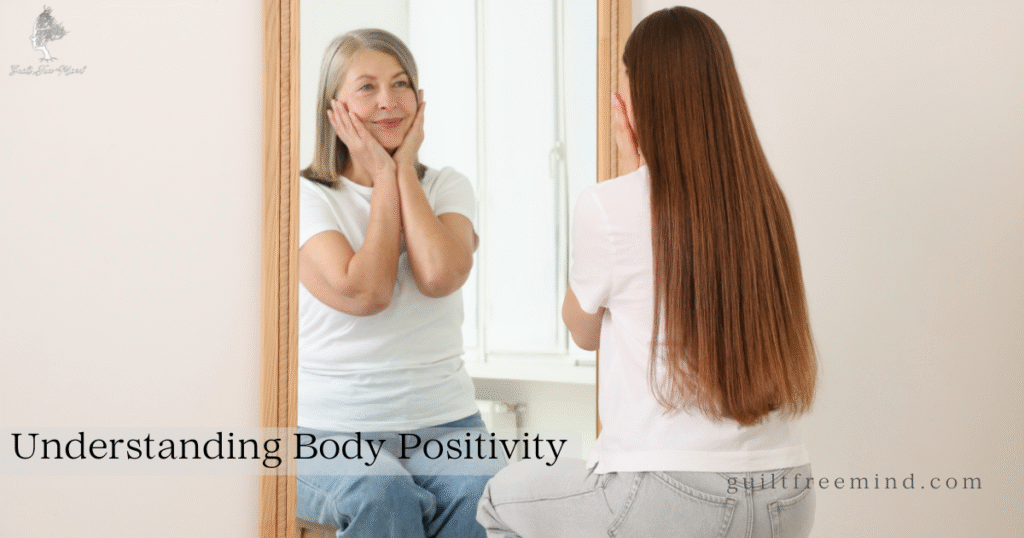
According to social media, thin, slim and toned is the perfect body image. This is a huge cause behind the current rise in the population suffering from eating disorders, stress, anxiety and other mental issues
Body image does not only stem up from what one sees on social media or the mirror. As per the national eating disorders Association (NEDA), there is a range of beliefs, generalizations and experiences which contribute to one’s body image and body negativity.
Body image has been talked, pondered and discussed about throughout history. These views have been shaped by cultural beliefs, social media, society as well as television and other forms of media networks.
“All bodies deserve respect, not just the ‘perfect’ ones.”
— Kendra Cherry, MSEd, Verywell Mind
However, these popular standards of beauty have not helped the common masses. Instead, they have led to a serious increase in the population suffering from eating disorders and body negativity.
People who suffer from body negativity not only feel uncomfortable in their own skin, it hamper their ability to function normally in daily life and has a negative impact on their social life, work, relationships and other areas of life. Such people are more prone to depression, stress, anxiety disorders, and other mental issues.
In this article, I will discuss 15 tips that would help you in achieving body positivity and improve your body image.
Table of Contents
At a glance
| What It Is | Key Benefits | Common Challenges | Quick Start Tips (2026 Edition) |
|---|---|---|---|
| Loving & accepting your body regardless of size, shape or ability | ↑ self-esteem ↓ depression risk ↓ disordered eating | Social media filters AI “perfect” bodies Toxic positivity pressure | 1. Unfollow AI-edited accounts 2. Daily gratitude for what your body does 3. Neutral statements on hard days |
| Core Message | Science Backing | Best For | Founder’s Note |
| Your worth is not your appearance | Studies show 20–30% drop in body dissatisfaction with practice | Chronic illness (RA, etc.), post-trauma recovery, social media burnout | “After 20 years with RA, art taught me: my body is worthy even when it hurts.” – Shruti |
What is body image?
Body image refers to one’s perception, beliefs and emotional attitude towards their own body. body image primarily implies
- What a specific person feels about their own appearance.
- What that person feels about his or her weight shape and height.
- How do they sense their body and control the movement?
- How confident they are about their body?
A specific persons body image can range from positive or being comfortable in themselves to negative or feeling dissatisfied with their looks or body.
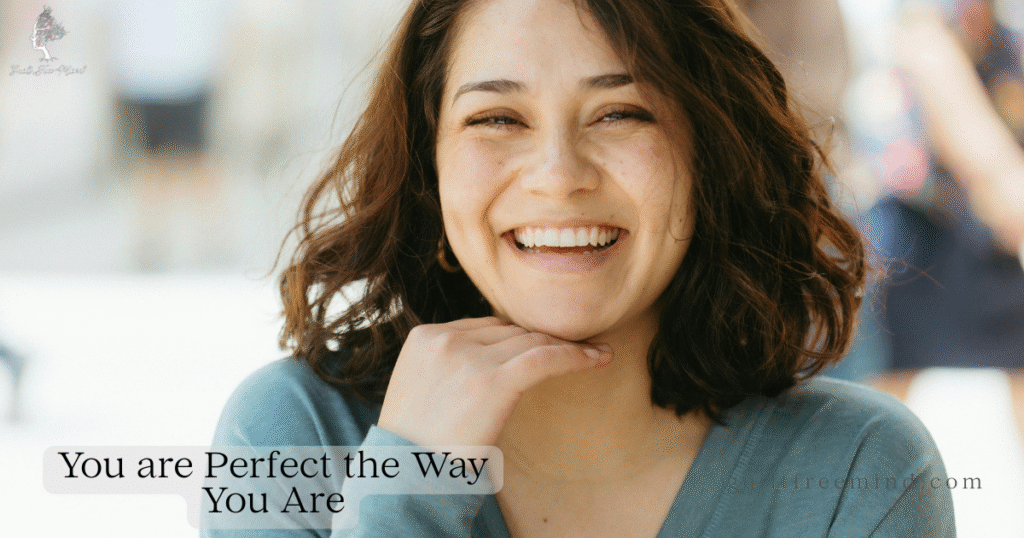
Understanding Body Positivity: Definition, History, Benefits, Criticisms, and a Balanced View
Body positivity isn’t just a buzzword—it’s a powerful movement that challenges societal standards and empowers you to embrace your body exactly as it is. At its core, body positivity is the practice of accepting and loving your body regardless of size, shape, skin tone, ability, or appearance (Gaceta Médica de México, 2022). It shifts the focus from “fixing” yourself to celebrating what your body does for you every single day (Verywell Mind, 2025).
“Body positivity started as radical fat liberation—don’t let it become another beauty standard.”
— Psychology Today Staff
History and Origins of the Body Positivity Movement
The movement traces back to the fat acceptance movement of the late 1960s, sparked by activists fighting weight discrimination. In 1969, Bill Fabrey founded the National Association to Advance Fat Acceptance (NAAFA) after seeing the mistreatment of fat people (Psychology Today). The Fat Underground’s 1973 Fat Manifesto demanded equal rights and called out diet culture as the enemy (Eating Behaviors, 2023).
In 1996, Connie Sobczak and Elizabeth Scott launched The Body Positive organization, turning it into a resource for shifting from toxic weight loss to genuine self-acceptance (your existing FAQ + 22). By 2012, social media amplified it through hashtags like #BodyPositivity, with influencers like Lizzo and Sonya Renee Taylor leading the charge. Today in 2026, it’s evolved to address AI-edited images and algorithm-driven comparison culture (NPR, 2020, Psychological Research and Behavioral Management, 2024).
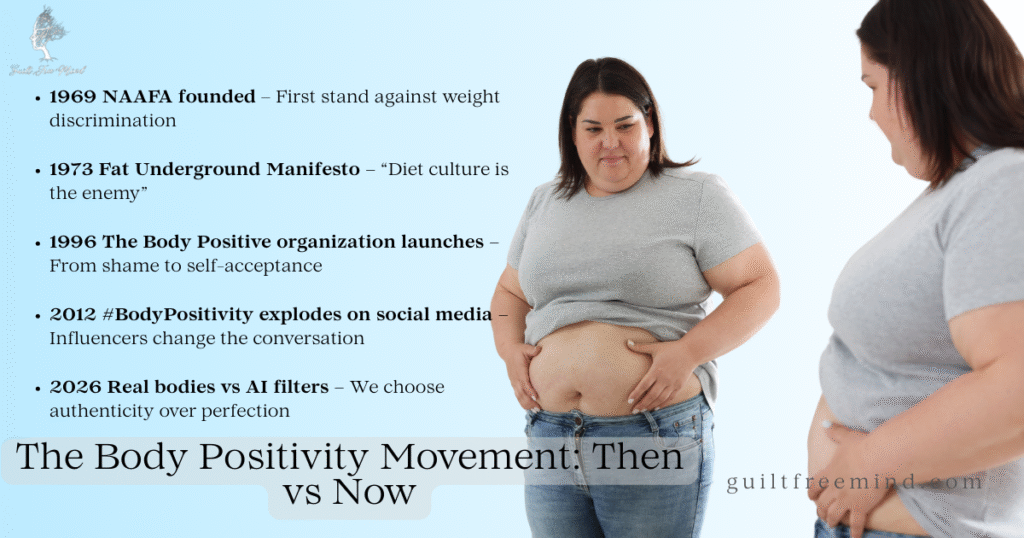
The Body Positivity Movement: Then vs Now (1969–2026)
The movement didn’t start as a hashtag — it began as a fight for basic human rights. Here’s how it has evolved, and why that evolution matters for you today:
| Aspect | Then (Origins 1969–1996) | Now (2026 Reality) | What This Means for You Right Now |
|---|---|---|---|
| Core Focus | Fat acceptance & ending weight discrimination | Full body acceptance + fighting AI filters & algorithm bias | Your body deserves respect, not perfection |
| Key Spark | Bill Fabrey founds NAAFA after seeing his wife mistreated (1969); Fat Underground releases Fat Manifesto (1973) | The Body Positive organization (1996) + social media explosion | You can turn personal pain (like my 20-year RA journey) into healing art and connection |
| Biggest Enemy | Diet culture & workplace discrimination | Deepfake “perfect” bodies, toxic positivity & comparison apps | Unfollow AI-edited accounts (see Tip 4) — your feed is now in your control |
| Main Tool | Manifestos & in-person support groups | Science-backed tips, body neutrality option & digital tools | Your daily gratitude practice (Tip 15) + art therapy works even better today |
| Biggest Win | First self-acceptance programs (The Body Positive, 1996) | Proven reduction in body dissatisfaction + more inclusive voices | You are not alone — thousands are using these exact tools in 2026 to feel guilt-free |
(Adapted from recent studies Journal of Health Psychology, 2021)
This isn’t ancient history — it’s your story too. The same movement that started in 1969 is the one that helped me turn RA weight gain and pain into art that connects with all of you. The fight continues, but now the tools are kinder, smarter, and more accessible than ever.
My Personal Experience: Living with Rheumatoid Arthritis and Finding Body Positivity Through Art
As the founder of Guilt Free Mind, I’ve lived with Rheumatoid Arthritis for over 20 years. In the last few years the condition has caused noticeable weight gain that sometimes makes me look in the mirror and feel the old familiar sting of body negativity. The swollen joints, the fatigue, the changes in my shape—they’re real and they’re hard.
But art became my gentle bridge back to peace. Creating through the pain taught me how to sit with discomfort instead of fighting it. Those same hands that ache also paint, sketch, and connect with thousands of you who are walking similar paths. My body’s “flaws” are now the very things that let me create, heal, and reach others.
That guilt-free shift—from hating the changes RA brought to appreciating what my body still does every single day—is the heartbeat of this article. If I can turn 20 years of chronic illness, weight gain, and physical difficulty into a mission that helps others love themselves exactly as they are, then you absolutely can too—one small, loving step at a time.
Watch: My Digital Painting Process – Turning RA Pain into Body-Positive Art. Even on days when my joints ache, I pick up my tablet and let the colors flow. This is how I stopped fighting my body and started celebrating what it can still create.
Insights from Original Research and Recent Studies
As the founder of Guilt Free Mind and someone who has lived with chronic pain, I don’t just share tips — I dig into the science so you don’t have to. I reviewed more than 20 recent peer-reviewed studies so every recommendation in this guide is grounded in real evidence, not just feel-good advice.
Here are some of the most powerful, actionable insights that stood out:
Social media’s impact is real, but the type of content matters far more than how much time you spend online
A 2024 review found that visual platforms like Instagram and TikTok can harm adolescent body image and increase disordered eating, yet the body-positivity movement itself is one of the most promising tools to counteract those harms. Another 2022 analysis confirmed that simply scrolling through idealized images hurts more than text-based platforms, but exposure to body-positive content actually improves body image.
“Focus on what your body does, not how it looks.”
— Anne Poirier, Intuitive Eating Counselor (Planned Parenthood Toronto)
Body-positive content on social media genuinely helps
Early research (2021) showed clear potential benefits for building positive body image when people engage with these posts. A 2023 experiment with 170 women went further: viewing body-positive and even humorous parody images (think relatable “real body” memes) increased body satisfaction, lifted mood, and lowered drive for thinness compared with traditional “perfect” body photos (JMIR Formative Research, 2024).
Content beats quantity every time
A 2023 study of college students found that seeing weight-loss content (diets, “before/after” posts) was directly linked to lower body appreciation, higher fear of being judged on appearance, and more binge eating — even if people didn’t spend that much time online (Current Opinion in Psychology, 2022). Interestingly, body-positivity or neutrality content didn’t always protect in that particular study, which reminds us why we need a balanced approach (more on that in the Body Positivity vs. Neutrality table).
Movement and physical activity are protective
A 2022 systematic review of 28 studies discovered a consistent pattern: the more adolescents engaged in structured or unstructured physical activity, the lower their body-image dissatisfaction. It didn’t matter whether they were “fit” — simply moving their bodies improved how they felt about them (The Journal of Psychology, 2023).
We still need more long-term research
Several studies emphasize that while body-positive content shows promise, we don’t yet have decades of data on real-world health outcomes. That’s why I combined the science with my own 20-year journey and practical tips that actually work in daily life.
These aren’t just academic findings — they are proof that small, consistent shifts (like the ones present in the 15 tips) can create real change. The research confirms what my art practice and RA journey taught me: your body is already worthy. The data simply gives us smarter, kinder ways to remind ourselves of that truth every single day.
Benefits of Body Positivity
Science confirms what we know intuitively: embracing body positivity reduces depression risk, boosts self-esteem, and lowers disordered eating behaviors. A 2024 review of social media’s impact found that body-positive content helps adolescents build resilience against harmful filters and trends. Women who practice it report better mental health outcomes, with studies showing 20-30% drops in body dissatisfaction.
“Weight stigma harms health more than weight itself.”
— Lindo Bacon, PhD, Health at Every Size pioneer (Children’s Hospital Colorado, 2023)
Criticisms of the Body Positivity Movement
No movement is perfect. Critics argue it can promote “toxic positivity”—forcing constant positivity even when you’re struggling. It sometimes excludes marginalized bodies (people of color, disabled folks, LGBTQ+ communities) and gets co-opted by brands pushing products. Plus, it can ignore health realities if taken to extremes (Journal of Behavior Therapy and Experimental Psychiatry, 2026).
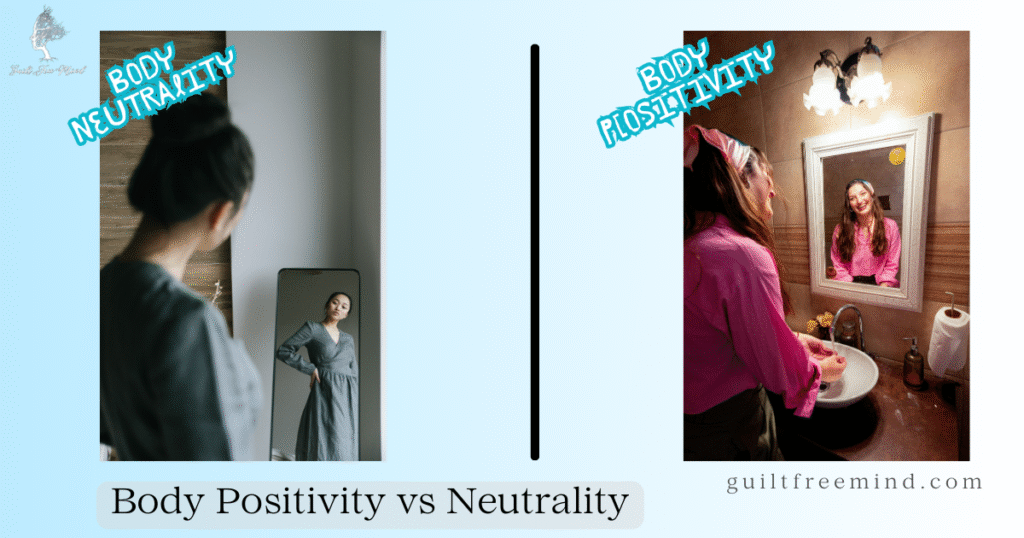
Body Positivity vs. Body Neutrality
A Comparison For many, body neutrality feels more realistic—especially if “loving” your body feels forced. Here’s the breakdown:
| Aspect | Body Positivity | Body Neutrality |
|---|---|---|
| Core Focus | Loving your appearance despite flaws | Accepting your body for what it does |
| Emotional Goal | Positive feelings and self-love | Neutral, non-judgmental respect |
| Best For | Days when affirmations click | When positivity feels inauthentic |
| Key Benefit | Counters diet culture head-on | Reduces pressure and guilt |
| Example | “I love my curves—they’re powerful.” | “My body lets me hug my kids and create art.” |
| 2026 Relevance | Great for social media challenges | Ideal amid AI body filters |
How to Avoid Toxic Positivity
- Allow “bad body days” without shame.
- Switch to neutral statements like “This is my body today” (Cleveland Clinic, 2022).
- Focus on function over form: “What did my body achieve this week?”
- If it feels overwhelming, talk to a therapist—body positivity works best with support (International Journal of Environmental Research and Public Health. 2022, Body Image, 2022).
15 Body Positivity Tips for 2026
It is very easy to say, love your own body, however, this notion is easier said than done. According to surveys, 70% of women aged 18-30 suffer from body negativity. On the other hand, 45% of men feel dissatisfied with their looks and body. If you are feeling down and bad about your body, remember, you are not alone.
In this article, I’ve updated these 15 tips for 2026 realities—like deepfake filters, AI-edited images, and algorithm traps. Start your journey of achieving body positivity with these few simple tips which can go a long way:
1. Practice positive affirmations
Changing the way you think will take time. This is not a one night job. It will take a while and a firm belief in yourself to start the journey of scorning body positivity
The first step in achieving body positivity is practicing self love. When it feels hard to be raspy about your body, you must practice self-affirmations, loudly and as often as possible. Engage in practising self-affirmations daily. Give yourself reminders and encouragements.
You can start practicing affirmations either by reciting them infront of the mirror every morning or by placing sticky notes on the refrigerator or bedside table. Another way to practice self-affirmations is to install encouragement on your phone or computer.
This activity may seem silly to you at first. However, this does not mean that it will not work to help you in achieving body positivity. Practice positive affirmations everyday for a period of one month without slipping. At the end of one month, you will realize that you are feeling better about your appearance and body. (2026 tip: Try voice-recording your affirmations on your phone — AI apps can even play them back gently throughout the day.)
“True positivity includes the hard days.”
— Claudia Chaves, MD
2. Work towards a healthy body, not a skinny body
The number on the scale should not be the determinant of your fitness goals. Healthy diet and a moderate level of exercise should not be a punishment either. Too much exercise for the purpose of losing weight has shown to put a lot of pressure on the heart. Such people land up with heart diseases. Therefore, your aim must be to achieve a healthy body. If you are overweight, yes you must work to lose weight. However, this work must never involve you starving yourself or over exercising, as both are harmful. and will not help you in achieving body positivity
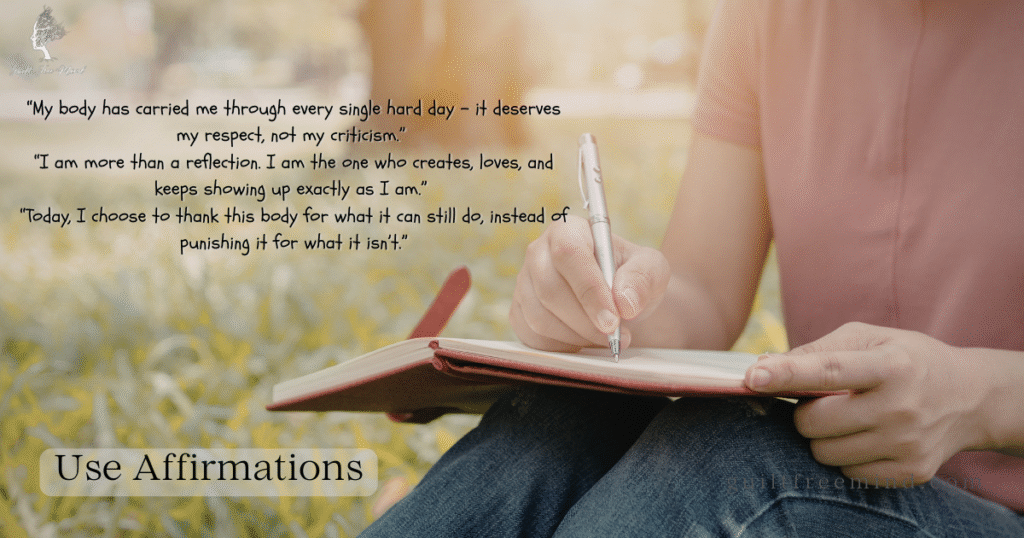
Focus on how much your body has helped you become who you are. Understand and pay attention to your strength, on all the incredible things you can do, thanks to your body. Focus on the amazing experiences your body has gifted you. Honor and worship your body by providing it worth nutritious means and enjoyable exercises. Make these your mantras as these will be your milestones in achieving body positivity.
3. Give compliment to others
Most often we land up judging others too harshly. This happens when we judge ourselves with too much criticism as well. However, instead of judging yourself and others harshly, practice being kind. You never know, maybe the other person is also working towards achieving body positivity. Your comment might make her/his day. Give others a nice compliment, be kind to others. In return, you will learn to be kinder to yourself as well. Give your peers a compliment you wish to get. Be someone else’s silver lining on the cloud. One day, this act of kindness will come back to you.
4. Surround yourself with positive people and positivity
There is negativity all around us. Negativity also have a way of seeping into our thoughts and increasing our insecurities towards our body. Negativity is the biggest hurdle in achieving body positivity. When you go through social media, the photoshopped images of models and fitness influencers fuel your insecurities about yourself.
A recent study has shown that the more time people spend on social media, the higher are their insecurities towards their own body.
Their is a simple fix to this problem and to get back on the horse of achieving body positivity.
You can either choose to spend less time on social media and more time with people who love you and care about you. Alternatively, you can unfollow people who make you feel insecure or promote body negativity. Follow those influencers who promote body positivity. Actively unfollow any accounts using AI-edited filters or deepfake “perfect” bodies — curate your feed for real humans only.
5. Focus on what you love about yourself
Achieving body positivity can be fairly easy if you put your mind to it. Every time a negative thought about your body pops up on your head, think about a positive factor of your body. Make a list in your head about all the features of your own body that you like or love. Don’t focus only on the looks. Focus on the usefulness of the part as well.
Feeling dissatisfied with ones body is natural and happens to all at some point of time. However, it can grow and turn into heaps of insecurity of not dealt with at the start. Therefore, the best way to stop this type of thinking process is to counteract it with daily reminders of how good your body actually is.
6. Do not compare
This world is made of people belonging to all shapes, weights and sizes. Nature loves imperfection. If we all looked the same and had the same body type, where would the diversity be? We would all be clones of one another.
Therefore, it is imperative that you understand that all of us are not supposed to be alike, in terms of figure or looks. We are all different and we are all beautiful in our own unique ways. You are not supposed to look like someone else. You are supposed to look just like you. Understanding this will help you win half the battle of achieving body positivity.
7. Remove the negative self talk
As I mentioned before, cutting down or removing the negative self talk will be a huge help in achieving body positivity. If you are about to say something derogatory about your own body, don’t say it. Your body works so hard everyday. It does not need or deserve this verbal abuse, from you or anyone else.
8. Increase the focus on positive body messages
Even if you start feeling positive about your body, the world is full of people who works spread negative body image. Do not let such people get to you. There is a lot of amazing literature available on body positivity. A lot of people suffering from body negativity have found these books useful on their path to achieving body positivity. You should focus your time and energy on such books which would enhance your body positivity and drown out body negativity.
“Neutrality isn’t giving up—it’s freedom.”
— Janet Tomiyama, UCLA Researcher
9. Treat your body
You get leave and holidays from your work place. However, your body is at work 24*7. Your body does not take a leave of absence. It is time to start giving back to this wonderful and amazing companion of yours. Indulge in some bubble baths, foot massages, or a full day at the spa as self-care. Such activities will not only refresh you, they will boost your mood.
10. Focus on self
To work on achieving body positivity you must first understand that you are so much more than just a body. You are a person who has talents, is compassionate and has so much love to share with others. So, spend less time focusing on your body and more time engaging in activities which you enjoy like painting, writing, making art, sculpting etc.
11. Spend time with positive people
The kind of company you keep has a huge effect on how you feel about yourself. If in your current friend circle, everyone is fixated on looks and body, it is time your get some new friends. Be friends with people who are comfortable in their own skin and are non judgmental towards others. A good company can get a huge positive effect on your self confidence, how you feel about yourself and can help you in achieving body positivity at a much faster pace.
12. Wear clothes which make you look good
Clothes play a huge part in achieving body positivity. You do not have to wear skinny clothes or clothes which highlight your body in a negative manner. Instead, wear clothes which show your amazing self. This will boost your self esteem, self confidence and make you feel less conscious of yourself.
“Talk to yourself like you’d talk to a friend.”
— Judith Matz, LCSW
13. Promote body positivity on social media
We preach what we believe. There are so many influencers on social media who are fixed on attaining a certain type of body image. Show yourself and show the world that loving yourself is more important than attaining a specific size or a specific number on the scale. Become an influencer of body positivity. Share your own real photos and also try body-positive apps like ThinkUp or Big Fit Girl that show real bodies and celebrate movement without filters.
14. Avoid perfectionism
Nature likes imperfection. No one in this world is perfect. You cannot be perfect. You can only be your best self. So don’t try to be perfect in terms of body. Be perfect in the person you are. Be kind, compassionate, and lovable. These qualities are far more important than looking a certain way or weighing a certain amount.
15. Practice gratitude for your body’s strength every day
Your body is working hard for you every single day, even when it feels difficult. Practicing gratitude for its strength is one of the most powerful ways to build lasting body positivity.
Take just two minutes each morning or night. Close your eyes and say thank you to three things your body did for you that day — maybe it helped you create art, walk your child to school, or simply breathe through the pain. Write them down in a small notebook or on your phone.
On days when RA makes everything feel heavier, this simple act reminds me that my body is still strong and worthy of love. Over time, this gratitude shifts your focus from what your body “isn’t” to everything it is — and that is the real secret to achieving body positivity.
How to Stop Body Negativity
Body negativity doesn’t vanish overnight. Here’s your action plan:
- Track triggers (social media, mirrors) for 7 days (Journal of Eating Disorders, 2025, Body Image, 2022).
- Counter with one neutral statement daily.
- Seek professional support if it persists (Body Image, 2022, Body Image, 2023).
- Build a “body wins” journal.
This stops the cycle before it leads to anxiety or worse.
7-Day Body Positivity Kickstart Checklist
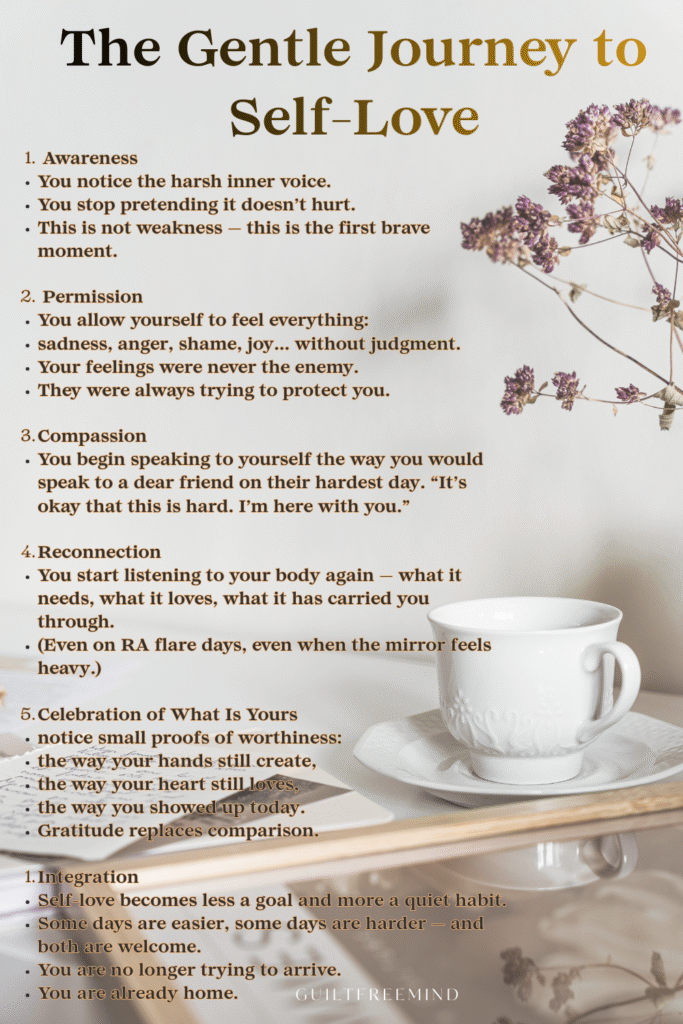
This 7-day checklist is not a test and there is no pass or fail. The only purpose is to offer small moments of kindness toward the person who has already carried you through so much — that person is you. Some days the step will feel easy, other days you may skip it completely, and both are perfectly okay. Treat yourself the way you would treat someone you truly love when they are having a hard day.
You do not need to fix anything or become someone new. You only need to remember, in tiny quiet moments, that your body and your heart have been doing their best all along. After twenty years of living with rheumatoid arthritis, I learned that self-love does not arrive in a perfect package. It arrives in small honest steps like the ones on this page. Take whatever feels good. Leave the rest without any guilt. Come back whenever you need a reminder that you are already enough.
Explore More on Guilt Free Mind
Whether you’re seeking gentle ways to quiet the inner critic, rebuild trust in your body after years of chronic illness, or simply feel less alone in your emotional journey, these resources from Guilt Free Mind are here to support you—one honest, guilt-free step at a time.
🧘♀️ Self-Care and Wellness
Discover simple, compassionate self-care practices that honor your body and mind exactly as they are today—whether through gentle movement, breath awareness, or small daily rituals that help you feel safe and grounded without pressure to “fix” anything.
🧠 Understanding Personality Disorders
Explore kind, realistic ways to navigate intense emotions, black-and-white thinking, or relationship patterns. Learn how self-compassion, boundary work, and nervous-system-friendly tools can bring more stability and softness to life with personality disorders.
🎨 Creative Healing and Therapy
Turn pain, confusion, or stuck feelings into something you can hold and understand through art therapy, journaling, expressive writing, or other creative outlets. These practices help release what words alone can’t touch and remind you that healing can feel beautiful, not forced.
💡 Mindful Productivity and Focus
Find calm, sustainable ways to get things done without burning out or shaming yourself. Learn how to set realistic boundaries, work with your natural energy rhythms, and use gentle focus techniques that respect anxiety, fatigue, or brain fog instead of fighting them.
💪 Emotional Recovery and Resilience
Build quiet strength after heartbreak, burnout, trauma, or long-term illness. These articles and tools help you process grief, bounce back from setbacks, and grow emotional resilience in a way that feels loving rather than punishing.
😌 Stress, Anxiety, and Depression Toolkit
Access soft, immediate ways to lower the volume on anxiety, ease heavy depressive days, and interrupt spiraling thoughts. From body-based resets to compassionate self-talk scripts, these resources are designed to meet you right where you are—no judgment, no rush.
Conclusion
We all have moments when we look in the mirror and feel the weight of negativity. But when that voice becomes constant, it’s no longer just “feeling down” — it’s body negativity, the starting point of anxiety, depression, eating disorders, and years of unnecessary suffering.
I know this firsthand. For 20 years rheumatoid arthritis has changed my body in ways I never asked for. Yet through art, science-backed research, and the 15 practical tips you just read, I turned that pain into power. The studies prove it works. The 2026 updates keep it real in an AI-filtered world. And your body — the same one that got you through every tough day — is already worthy.
You don’t need to be perfect. You just need to start.
Ready to make this real? Take these three guilt-free steps today:
- Watch my latest digital painting video and join me live every week on the Guilt Free Mind YouTube channel— short art sessions + body positivity meditations that help you create even on hard RA or chronic-illness days.Subscribe to Guilt Free Mind YouTube → (hit the bell so you never miss a new video)
- Get my free weekly newsletter delivered straight to your inbox. Every Sunday you’ll receive one powerful tip, a printable gratitude journal, early access to new guides, and zero spam — just the compassion and tools you need to keep going. Sign up for the Guilt Free Mind Newsletter here → (takes 10 seconds)
- Leave a comment below telling me which tip you’re starting with today. I read every single one and reply personally.
Your body has carried you through 100% of your hardest days. Now it’s time to carry it with love.
You’ve got this. No guilt. Only growth.
With strength and compassion,
Dr. Shruti
Frequently asked questions
Body positivity is feeling comfortable in how one looks regardless of the society’s ideal shape and size. It is accepting oneself about who they are.
When a person engaged in body positivity, they feel more positive towards themselves, it boosts their self confidence. They feel they are in control of their lives. Such people are less inclined towards suffering from eating disorders, depression and stress.
The body positivity movement was founded by Connie Sobczak and Elizabeth Scott in year 1996. They dared a passion towards creating a healthy lively community which offered freedom to all who were suffering from societal messages which suffocated people in their own skin.
Remind yourself that nobody is perfect. There is nothing called a perfect in this world. Show yourself the positive things about your body
– Love yourself
– Choose what you look at
– Practice self affirmations everyone you feel negative
– Stop the inner critic the moment it opens its mouth
– Indulge in giving treats to your body like spa day, bubble baths etc. whatever you like
– Dress the way you want to, in which you look good as per you
– Remind yourself society does not matter, only you matter
About the Author
Dr. Shruti Bhattacharya is the founder and heart of Guilt Free Mind, where she combines a Ph.D. in Immunology with advanced psychology training to deliver science-backed mental health strategies. Her mission is to empower readers to overcome stress, anxiety, and emotional challenges with practical, evidence-based tools. Dr. Bhattacharya’s unique blend of expertise and empathy shapes her approach to wellness:
- Academic & Scientific Rigor – Holding a Ph.D. in Immunology and a Bachelor’s degree in Microbiology, Dr. Bhattacharya brings a deep understanding of the biological foundations of mental health, including the gut-brain connection. Her completion of psychology courses, such as The Psychology of Emotions: An Introduction to Embodied Cognition, from University of Cambridge enhances her ability to bridge science and emotional well-being.
- Dedicated Mental Health Advocacy – With over 15 years of experience, Dr. Bhattacharya has supported hundreds of individuals through online platforms and personal guidance, helping them navigate mental health challenges with actionable strategies. Her work has empowered readers to adopt holistic practices, from mindfulness to nutrition, for lasting resilience.
- Empathetic Connection to Readers – Known for her compassionate and relatable voice, Dr. Bhattacharya is a trusted guide in mental health, turning complex research into accessible advice. Her personal journey as a trauma survivor fuels her commitment to helping others find calm and confidence.
- Lifelong Commitment to Wellness – Dr. Bhattacharya lives the principles she shares, integrating science-based habits like balanced nutrition and stress management into her daily life. Her personal exploration of mental health strategies inspires Guilt Free Mind’s practical, reader-focused content.
🏆 Guilt Free Mind was named one of the Top 100 Mental Health Blogs on Feedspot in 2025.

Follow me on:
References
- NPR. (2020). How body positivity can lead to better health.
- Mazzeo, S. E., et al. (2024). Mitigating harms of social media for adolescent body image and eating disorders: A review. Psychological Research and Behavioral Management.
- Cohen, R., et al. (2021). The case for body positivity on social media: Perspectives on current advances and future directions. Journal of Health Psychology.
- Vandenbosch, L., et al. (2022). Social media and body image: Recent trends and future directions. Current Opinion in Psychology, 45, Article 101289.
- Sanzari, C. M., et al. (2023). The impact of social media use on body image and disordered eating behaviors: Content matters more than duration of exposure. Eating Behaviors, 49, Article 101722.
- Corberán, M., et al. (2026). Cognitive training via mobile app for addressing eating disorder-related cognitions in the general adolescent population: Randomized controlled trial. Journal of Behavior Therapy and Experimental Psychiatry, 91, Article 102089.
- Gualdi-Russo, E., et al. (2022). Physical activity and body image perception in adolescents: A systematic review. International Journal of Environmental Research and Public Health.
- Canals, J., et al. (2022). Risk factors and prevention strategies in eating disorders. Nutrición Hospitalaria, 39(Spec No2), 16–26.
- Jiménez-García, A. M., et al. (2025). Impact of body-positive social media content on body image perception. Journal of Eating Disorders, 13(1).
- Mink, D. B., et al. (2022). TikTok use and body dissatisfaction: Examining direct, indirect, and moderated relations. Body Image.
- Kim, J., et al. (2023). Body positivity through creative immersion: A qualitative study of women’s pole dancing experiences. Health Care for Women International.
- Albert, S. L., et al. (2024). Body positivity, physical health, and emotional well-being discourse on social media: Content analysis of Lizzo’s Instagram. JMIR Formative Research.
- Fasoli, F., et al. (2023). Body positivity or humorous parody? The impact of Instagram imagery on body image concerns. The Journal of Psychology, 157(5).
- McCallum, M., et al. (2021). Body positivity and self-compassion on a publicly available behavior change weight management program. International Journal of Environmental Research and Public Health, 18(24), 13358.
- Neratzi, S., et al. (2026). A literature review on “body positivity”: A topical trend from different points of view. Advances in Experimental Medicine and Biology.
- Vendemia, M. A., et al. (2022). Promoting body positivity through stories: How protagonist body size and esteem influence readers’ self-concepts. Body Image, 42, 315–326.
- Legault, L., et al. (2022). When body positivity falls flat: Divergent effects of body acceptance messages that support vs. undermine basic psychological needs. Body Image.
- Harriger, J. A., et al. (2023). The body positivity movement is not all that positive on TikTok: A content analysis of body positive TikTok videos. Body Image.
- Lipińska, A. (2025). Relationship between body positivity and body neutrality with body image, self-esteem, mindfulness and gratitude. Scientific Reports, 15(1), Article 38699.
- Lang, M., et al. (2024). Beauty ideals and body positivity: A qualitative investigation of young women’s perspectives on social media content in China. Frontiers in Psychology.
- Kłoda, M., et al. (2025). Body positivity and eating behaviors among women attending fitness classes: Associations with body mass index. Healthcare, 13(23).
- Sánchez-Rojas, A. A., et al. (2022). Self-image, self-esteem and depression in children and adolescents with and without obesity. Gaceta Médica de México, 158(3), 118–123.
- Cherry, K. (2025). What is body positivity? Verywell Mind.
- Psychology Today Staff. Body positivity. Psychology Today.
- Osborn, T.. What is the history of body positivity? BBC Bitesize.
- Krouse, L.. Tips for body positivity: Ways to feel better about our bodies. The Jed Foundation.
- Kroon Van Diest, A. (2026). How to promote body positivity in kids. The Kids Mental Health Foundation.
- Nitschke, E., & Adair, D. (2024). Body positivity: Finding a balance. American Council on Exercise.
- Lilly, B. (2024). Body positivity and mental wellness: Embracing self-love. Tanner Health.
- Planned Parenthood Toronto. Body positivity.
- Albers, S. (2022). What’s the difference between body positivity and body neutrality? Cleveland Clinic.
- Fuller, K. (2025). Body positivity vs. body neutrality: What each one is and how a dual approach may be best. Verywell Mind.
- The Emily Program. (2021). Understanding body positivity, body acceptance, and body neutrality.
- Children’s Hospital Colorado. (2023). Body positivity: How to help kids build a healthy self-image.
