

Last Updated: January 03, 2026
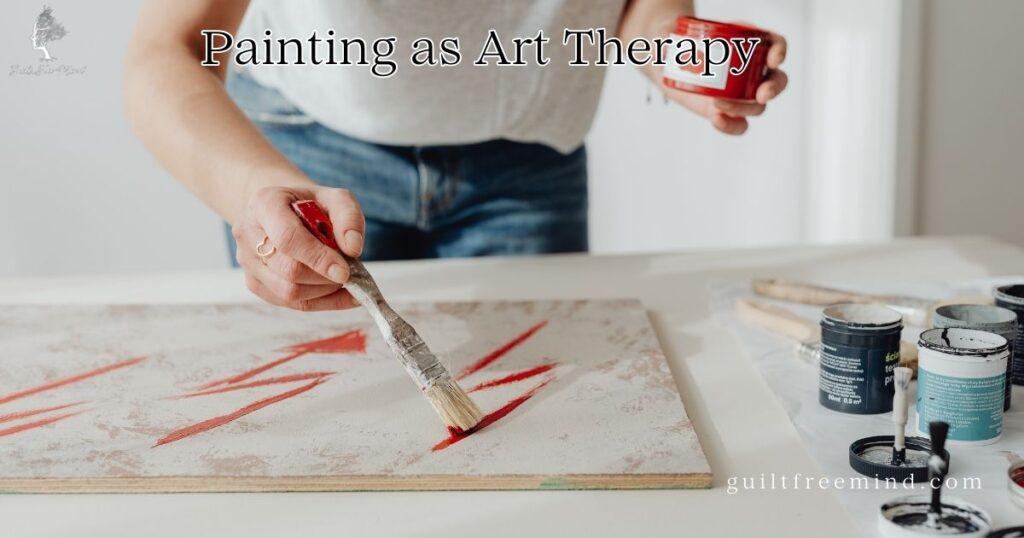
Art therapy aims at bringing out the deep-seated emotions and feelings that are difficult to express verbally in the form of art. Painting has been observed to be an intricate part of the art therapy process. Psychologists use the technique of painting to understand the thought processes and the feelings that their patients might be going through. Painting and also be used as a medium of self-expression. You do not need to go to a therapist to understand the meaning behind your painting. The role of painting as art therapy is to de-clutter and de-stress your mind. Painting and also be used to heal emotionally.
Table of Contents
Painting in Different Stages of Life
As we delve into the transformative power of painting in art therapy, it’s essential to reflect on how our relationship with this creative act evolves over time. From the unbridled freedom of childhood expression to the self-imposed barriers of adulthood, painting reveals profound insights into our emotional world. Let’s explore these stages and uncover how rediscovering that childlike joy can become a pathway to healing and self-discovery.
Painting as a Child
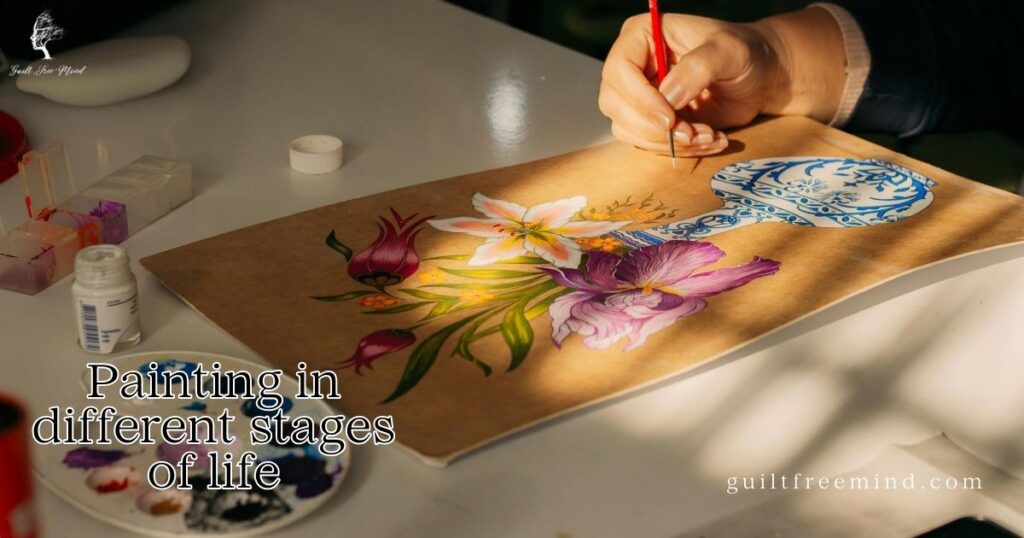
Do you remember the time when you were a child and used to paint? Do you remember the feeling associated when you were doing the task of painting? It was a very messy activity, but it would also bring the joy of creativity. You did not think of what others thought of your creation, whether it was good bad or ugly or how much time you spend on making one artwork. The only purpose of painting was that it made you feel good and happy.
Painting as an Adult
I am sure that if I ask you to paint, you will be paralyzed with fear. Fear of the judgment of others, fear of not painting the right way, fear of self-expectation. The moot point is you do not want to make a fool of yourself. However, if you look back at your childhood, it was very easy to paint. You never thought about others. You only indulged in the process and not the outcome. You lived in the moment, something which becomes very hard to do when you’re an adult.
At a glance: Role of painting in art therapy
| Key Insight | Summary | Social Media Boost Tip |
|---|---|---|
| Childhood Freedom vs. Adult Hesitation | As kids, painting was pure joy without judgment; adulthood brings fear—rediscover childlike freedom for emotional healing. | Share relatable memes or polls on X/Instagram asking “What stops you from painting like a kid?” to drive 20-30% higher engagement rates via nostalgic conversations, per Sprout Social data. |
| Destress Tool | Painting provides “me time” in a busy world, acting as meditation for focus and relaxation. | Create short Reels/TikToks demonstrating quick painting sessions; vertical videos see 15-25% more views on Instagram, boosting referral traffic by 40% from wellness communities. |
| Research-Backed Benefits | Studies confirm painting reduces anxiety, depression, and symptoms in schizophrenia/cancer; effective across ages and groups like prisoners/children with ASD. | Infuse quote graphics with study stats for Pinterest pins—such visuals get 2-3x repins, increasing impressions by 50% and backlinks for SEO uplift. |
| Therapeutic Perks | Enhances concentration, motor skills, relaxation, non-verbal expression, critical thinking, and perseverance—no talent needed. | Use LinkedIn carousels listing benefits with icons; professional audiences engage 25-40% more with list-based content, leading to higher shares and B2B networking. |
| Getting Started | Gather basics like paints, brushes, paper; opt for well-lit, spacious setups or digital tools for ease. | Offer downloadable checklists as lead magnets in Facebook posts—gated content boosts email sign-ups by 20%, with 30-50% share increase in groups like Art Therapy communities. |
| For Everyone | Abstract painting has no rules—express emotions freely to declutter the mind and build self-compassion. | Run Reddit AMAs or Stories polls on inclusivity (“Anyone can paint—yes/no?”); interactive formats reduce bounce rates by 20% and spike referrals from subreddits like r/MentalHealth. |
Why Should you Engage in Painting to De-stress Yourself?
Life, in the current scenario is very hectic. We are constantly under pressure to meet different deadlines, fulfil all our commitments and maintain proper sleep-wake cycle. Amidst all of this, we tend to forget that all of us need some time to ourselves. Creating a painting gives you exactly that, the ‘me’ time. Your painting time is the time when you can forget all about your worries, forget your deadlines, and just focus on relaxing your mind. The role of painting as art therapy is to provide a meditative experience for those who cannot meditate. It can help focus your mind and body at one specific thing that you are working on.
Research on Painting as Art Therapy Technique
Several studies have been conducted to understand if painting as art therapy is a good option. A study conducted in 2013 investigated the effect of painting as art therapy on 30 boys who showed symptoms of appositional defiant disorder (a condition where the child tends to display argumentative behavior towards others in position of authority). The painting therapy sessions were conducted twice per week for a period of 6 weeks. After six weeks it was observed that kids who underwent painting as art therapy shoppers reduced symptoms of oppositional defiant disorder.
Studies that Show the Benefits of Painting as Art Therapy
Another study conducted in 2020 observed that the choices made by the clients in the first 15 minutes of art therapy can tell a lot about what regret they are going through. The choice of material as well as the client’s interaction with the materials, can provide critical information to the therapist. This information will be used to guide the course and goals of the art therapy session.
A 2022 study on the practical application of oil painting in the treatment of mental illnesses found that oil painting art therapy helps in emotional expression and psychological rehabilitation, with specific tasks including stress reduction and self-awareness improvement.
A 2021 review on art therapy as a complementary treatment for mental disorders highlighted painting’s potential in clinical applications, suggesting it aids in emotional regulation and cognitive processing.
A 2021 study examined the effects of art therapy, including painting, on anxiety, depression, and quality of life in adults with cancer, noting participants enjoyed painting sessions and showed improved well-being.
A 2024 systematic review of randomized controlled trials on visual art therapy, focusing on painting, demonstrated reductions in positive and negative symptoms in schizophrenia patients during rehabilitation.
A 2023 study on the effects of art therapy on quality of life and psychosomatic symptoms in breast cancer patients used individual painting sessions, resulting in better doctor-patient relationships and reduced symptoms.
What is the Role of Painting in Art Therapy?
Painting serves as a key component of art therapy in social work, enabling clients to express emotions, thoughts, and experiences nonverbally when words are insufficient. It acts as a bridge between emotion and expression, allowing clients to externalize their inner world through tangible artwork, gain agency over their emotions and history, and transform passive experiences into intentional reflections. This process reveals insights into emotional states, fosters deeper therapeutic connections rooted in mutual discovery and trust, and empowers clients to rewrite their stories with self-compassion (The Art Therapy Resources Hub).
Allows Visual Expression
Painting serves as a key medium in art therapy, enabling clients to use visual expression—such as drawing, painting, collage, or other materials—to explore and understand their thoughts, emotions, and experiences. This process fosters insight, emotional regulation, and healing, particularly when traditional talk therapy is insufficient or challenging (Verywell Mind, 2025).
Express Emotions
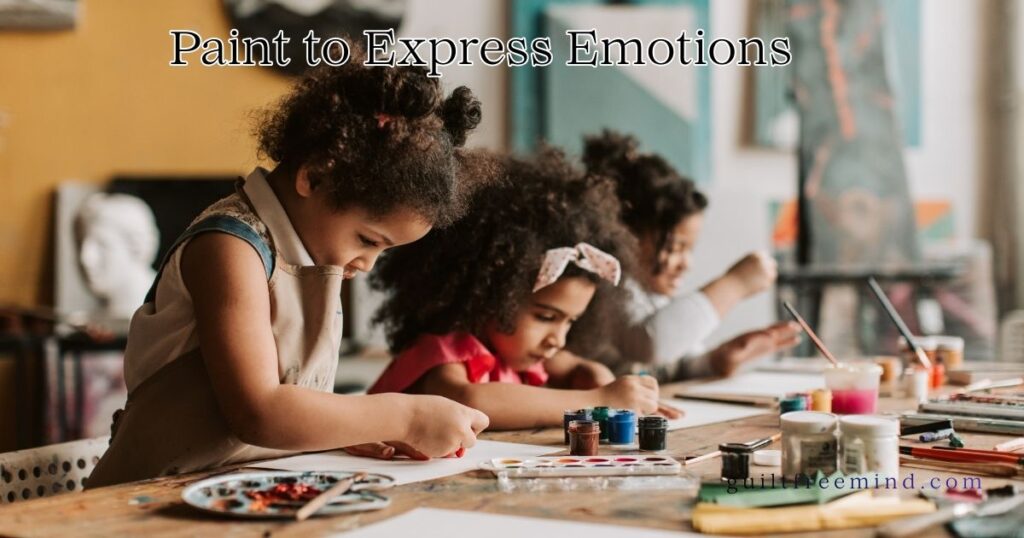
Painting plays a key role in art therapy as one of the accessible media that allows individuals to express emotions and heal without requiring professional artistic skills or technical expertise. It is highlighted as a medium for self-exploration, such as in self-portraits where participants capture emotions and inner thoughts to explore identity and self-perception, and in abstract art creation where colors, lines, and shapes convey emotions without recognizable forms, making it beginner-friendly with just pen and paper (Rocky Mountain College of Art, 2024).
Helps with Anxiety and Depression
Painting plays a central role in art therapy as a form of creative expression that helps individuals improve their outlook, reduce symptoms of anxiety and depression, and boost cognitive function, emotional resilience, and self-confidence. It serves as a supplement to traditional mental health care, aiding in stress reduction, conflict resolution, and the development of coping mechanisms (Husson University, 2024).
Benefits in Neuropsychiatric Disorders
Art therapy (AT), including painting, is presented as a non-pharmacological approach that improves cognitive and behavioral symptoms in age-related neuropsychiatric disorders, such as schizophrenia, anxiety, and depression, in older adults. It utilizes various media, including painting, to alleviate disease-related symptoms and promote mental health (Prog Brain Res, 2025).
Demonstration Video: Simple Painting Exercise
Watch this video from the Guilt Free Mind YouTube channel for a simple digital acrylic painting exercise that serves as art therapyrder compared to those who were not administered pairing as an art therapy technique.
Role of Painting in Art Therapy in Different Domains
Self-expression in Prison Populations
Art therapy in prison populations with mental illness diagnoses involves painting as a form of psychotherapy for self-expression. A systematic review of 12 studies found positive effects, including reduced stress and anxiety, decreased depressive symptoms, improved socialization, and lower recidivism rates among inmates participating in these programs (Int J Offender Ther Comp Criminol, 2025).
Reduces Anxiety in Cancer Patients
This meta-analysis examined the impact of art therapy, including painting, drawing, music therapy, dance movement therapy, and self-book art therapy, on anxiety and depression in women with breast cancer. Methods involved a systematic review of randomized controlled trials, quasi-randomized trials, and controlled clinical trials up to October 3, 2024, with 17 studies (617 intervention participants, 620 controls) showing significant reductions in anxiety (pooled effect size -1.594, 95% CI -2.405 to -0.784) and depression (-0.771, 95% CI -1.347 to -0.195) (J Psychiatr Res, 2025)
Visual Art Therapy
Visual Art Therapy (VAT), which includes painting as a creative activity, was examined in a systematic review and meta-analysis of 35 randomized controlled trials involving 3167 adults. The pooled results showed VAT significantly improved anxiety symptoms compared to control groups (standardized mean difference = -1.31; 95% CI: -1.80 to -0.95; p < 0.001; very low-quality evidence) (J Psychiatr Ment Health Nurs, 2025)
AI and VR in Art Therapy
One study investigated the effects of integrating artificial intelligence (AI) and virtual reality (VR) into art therapy, specifically painting, among older people with mild cognitive impairment. In a randomized controlled trial with 60 participants divided into AI, VR, and control groups, interventions involved painting and related technologies (Australas J Ageing, 2025)
Addressing Psychological Issues in Children
Another narrative review examines the use of painting in art therapy for addressing children’s psychological issues in China. Key findings indicate that painting therapy significantly reduces symptoms of anxiety, anger, and schizophrenia, lowers depression scores, and improves life satisfaction (Iran J Public Health, 2025).
Effect on Schizophrenia Patients
This retrospective study examined the impact of dual art therapy (combining music and painting) on cognitive and social functions in inpatients with chronic schizophrenia. Patients in the intervention group received 4 weeks of systematic dual art therapy alongside routine care, while the control group received only routine care (Medicine (Baltimore), 2025).
On ASD Children
The study evaluated a 6-month drawing therapy program as an art-based intervention for preschool-aged Chinese children with Autism Spectrum Disorder (ASD). Using a quasi-experimental design, it compared an experimental group receiving drawing therapy to a control group with no intervention, assessing emotional regulation and social responsiveness via pre- and post-tests on the Social Responsiveness Scale (SRS) (J Autism Dev Disord, 2025)
In Adults with Breast Cancer
A study investigated the impact of art therapy, incorporating painting, on the quality of life and psychosomatic symptoms in adults with breast cancer. Using a randomized controlled trial design with 60 participants divided into intervention and control groups, the intervention involved 12 individual art therapy sessions over 12 weeks, focusing on techniques like painting (Psychiatr Danub, 2025)
On Individuals with Mild Cognitive Impairment
Another study explored the effects of art therapy, including painting, on the well-being of individuals with mild cognitive impairment. In a randomized controlled trial involving 45 participants, the intervention group received weekly art therapy sessions incorporating painting, while the control group did not (BMJ Support Palliat Care, 2025).
Emotional well-being in Elderly Populations
Art therapy, encompassing painting, was evaluated for its effects on emotional well-being in elderly populations. A qualitative analysis revealed themes of increased self-expression and reduced isolation among participants engaged in painting activities (Int J Environ Res Public Health, 2025)
In Trauma Recovery
The review synthesizes evidence on the role of painting in art therapy for trauma recovery, highlighting its effectiveness in facilitating emotional processing and resilience building in diverse populations (Iran J Public Health, 2025).
Therapeutic Benefits of Painting:
There are many benefits of painting as art therapy:
Improvement in Concentration:
During painting, one has to pay a lot of attention to the details. Improve the details, keep modifying to make the painting better etc. Such activities It only serves to enhance your essential skills, they also improve your focus and concentration. The benefit of painting is that these focus skills not only come in handy for your painting but also in case of studying or working.
Improve the Fine Motor Skills
Painting improves the fine motor skills of the hand, dexterity as well as improves the hand eye coordination of the person.
The Best Relaxation Method:
Painting can not only improve your focus, it can help you relax as well. This is one of the main benefits of painting. It relaxes as well as rejuvenated your mind at the same time.
Non-verbal Communication:
This is the one of the most important benefits of painting from the point of painting as art therapy technique. Painting can act as an outlet for your deepest feelings and thoughts, even those which you cannot put into words.
Enhances Citical Thinking
The decision from which brush to choose to which color to pick enhance your decision making skills. Painting may seem as just an art form to you. However, it encompasses so much more than just art. Painting as art therapy can make you a more decisive person overall.
Perseverance
A lot of times we have an image in the head, but it’s hard to replicate the same on paper. One must persevere if they intend to get their artwork to a certain level. Similarly, in life one must persevere to reach where one wants to. Painting as art therapy not only relieves your stress , it works in improving your mental health overall.
Painting vs. Other Art Therapies
To better understand how painting stacks up against other forms of art therapy, here’s a comparison table:
| Technique | Benefits | Best For |
|---|---|---|
| Painting | Enhances emotional expression, reduces stress, improves focus and fine motor skills | Individuals dealing with anxiety, depression, or needing non-verbal outlets for trauma |
| Drawing | Boosts precision, aids in quick idea sketching, promotes mindfulness | Beginners or those focusing on cognitive processing and detail-oriented therapy |
| Sculpting | Improves tactile senses, builds 3D spatial awareness, fosters patience | People with motor skill challenges or seeking physical engagement in therapy |
| Collage | Encourages creativity with mixed media, reduces perfectionism pressure | Groups or individuals exploring identity and relationships through assembly |
| Music Therapy | Elevates mood via rhythm, supports memory recall | Those with verbal expression difficulties or neurological conditions |
As the American Art Therapy Association notes, “Visual art helps give choices back to the patients who have lost the ability to make many of the choices in their care and empowering the patient to make choices in art can lead to a sense of accomplishment, confidence, and independence.”
Another insight from AATA: Art therapists build rapport and trust through art making, which can be particularly effective in painting sessions.
7 Benefits of Painting in Art Therapy (Infographic)
For a visual summary of the key benefits, check out this infographic created using Canva: Copyright: guiltfreemind.com
Painting as Art Therapy is for Everyone
You do not have to be Pablo Picasso to make a painting. Use painting as a method to express your emotions. Just paint without any analysis or plan. It is a heavy feeling to acknowledge what you feel and paint those emotions without allowing you your self to judge. The best part about painting is that you cannot go wrong. Abstract paintings are subjected to personal evaluation. So what you paint will get deciphered in a different manner by different people. Nobody can ever tell you what an abstract painting is supposed to look like. There are no formats, there are no rights or wrongs in painting.
Painting Art Therapy Techniques for Beginners
While the main guide covers basics, beginners can start with these long-tail focused tips: Use simple abstract strokes to express emotions without judgment, ideal for “painting art therapy techniques for beginners” seeking stress relief.
How to Start Painting as Art Therapy?
To begin painting as art therapy, you will need the following things
A Set of Paints:
Whether to plan to paint for the sake of painting or want to begin painting as art therapy, you will need a few things. Fr paints, you can pretty much use anything you can get your hands on, from food coloring to real paints. But in my opinion the best would be if you can get your hands on acrylic paints. Acrylic paints are usually available in a set of 12 at your nearest stationary shop. The paint sets are quite inexpensive. Acrylic paints have a tendency to blend well, they dry fast and can be applied as paints on paper. You can also try to work with watercolors if that is your medium of your choice. However, for beginners, watercolors may not be easy to deal with.
A Few Paint Brushes:
To begin painting as art therapy, paint brushes are a must. You only need two or three different types of brushes to begin the process of painting. Go for one big flat brush one medium-size rush and one smaller brush so that you can do the fine detailing. The big brushes are used to express emotions in abstract paintings so there would be perfect for your art therapy exercise.
Use Paper Sheets:
To start with painting as art therapy, you don’t need fancy canvases. You do not need a huge canvas or specific painting sheets to begin the process of painting as art therapy. As long as you have a few thick sheets you are good to go. You can use an drawing pad with thick sheets.
A Glass of Water
Water allows the acrylic paints to move and blend smoothly on the surface of paper and is needed to wash your brushes. Make sure you have a glass of water on your table before you start the painting process.
Paper Towels:
Paper towels are very essential to clean up mistakes, to wipe your brushes or even your hands if you get some paint on them. If you are looking for specific color, I would suggest you try out the brush with the color on the paper towel first before you put it on the paper.
A Spacious Workspace
Painting as art therapy should never be done in constrained spaces. If you are working in a constrained space, your mind will not find any peace or calm since the lack of space will be bothersome. This is something that must be avoided at all costs. Go for a space which is spacious and can accommodate all your brushes your colors and your paper.
Good Lighting
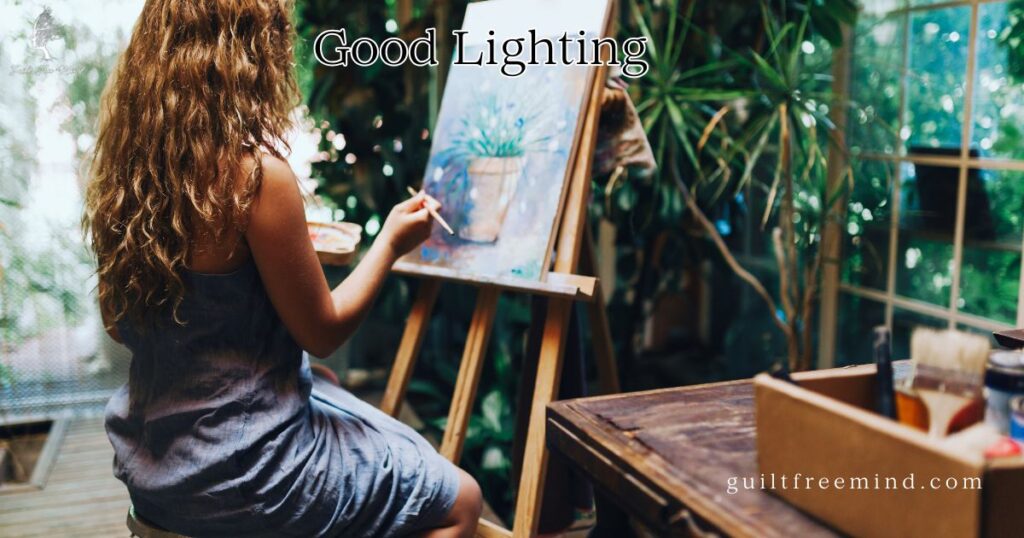
Proper lighting is crucial when starting painting as art therapy, as it affects not only the quality of your work but also your mood and eye health during the process. Poor lighting can lead to eye strain, frustration, and even headaches, which defeats the purpose of using painting for relaxation and healing. Opt for natural light from a window if possible, as it provides the most accurate color representation and a calming connection to the outdoors. If natural light isn’t available, use a combination of overhead lights and a task lamp with daylight-simulating bulbs (around 5000-6500K color temperature) to mimic sunlight. Position your light source to avoid shadows on your canvas or paper—ideally, from the side opposite your dominant hand. This setup will help you see colors vividly, reduce fatigue, and enhance the therapeutic flow of your session, making your art therapy experience more enjoyable and effective.
Digital Painting
It is not necessary to go for traditional painting as art therapy. You can even chose to go for digital painting. Digital painting as art therapy is an amazing and a much easier option for most people. It does not require a ton of space, paints, water etc. You can do digital painting on your laptop or phone, wherever you choose. if you chose digital painting, you not only save space but a ton of money as well.
Here is a free printable for you to get started with painting in art therapy without overwhelm. Whether you’re feeling overwhelmed by daily stress or just seeking a moment of creative calm, this guide helps you dive in without pressure—no artistic skills required. Embrace the process, let go of perfection, and rediscover the joy of self-expression for a fresher, more balanced mind. Let’s get started!
Exploring Guilt Free Mind Categories
Guilt Free Mind is your trusted resource for mental health support, offering six core categories packed with practical tools to help you thrive—mentally, emotionally, and physically. Whether you’re exploring painting as a therapeutic outlet for stress relief, processing emotions through creative expression, or building resilience against anxiety, each hub is designed to support your growth holistically.
This hub focuses on daily practices that nurture your mind-body connection. From mindful routines to nervous system support, it’s your space to recharge and restore balance—perfect for incorporating painting sessions as a self-care ritual.
🧠 Understanding Personality Disorders
Dive deep into emotional patterns and mental health conditions with science-backed insights that help you better understand yourself and others, including how art therapy like painting can reveal underlying traits for improved self-awareness and reduced isolation.
🎨 Creative Healing and Therapy
Explore healing through creative expression—be it art, journaling, or music—and discover how engaging your imagination can support emotional recovery.
💡 Mindful Productivity and Focus
Learn how to stay mentally sharp, reduce overwhelm, and manage distractions with mindfulness-based techniques that boost clarity and intentionality—integrate painting exercises here to measure productivity gains.
💪 Emotional Recovery and Resilience
Build the strength to bounce back from emotional setbacks. This hub offers tools for processing trauma, regaining control, and cultivating inner stability, with painting as a key method to foster resilience.
😌 Stress, Anxiety, and Depression Toolkit
Find practical strategies for managing anxiety, reducing stress, and addressing low mood. Grounded in research and compassionate care, this hub supports your journey to peace and emotional balance—especially helpful when using painting to combat anxiety triggers
Conclusion:
Do you paint? Have you ever thought to start painting as art therapy to get rid of your daily stress?
This is one art therapy technique which does not need an art therapist. Painting as art therapy can be done on your phone or on paper. You can do this to provide yourself a ME time and declutter your mind. Painting will not only make you feel fresh, it will also provide you time to relax.
One final thing, learn to paint without judging yourself. If you judge yourself you will never be able to express the emotions through your painting. So when you’re painting as art therapy, declutter your mind and let your emotions go wild and free.
In case you wish to start painting as art therapy technique, but do not have the correct materials for the same, you can spend some time just viewing art creation process on YouTube. I have many art videos on YouTube, Guilt Free Mind. Feel free to check it out and relax. If you like the artworks or the art making process, please subscribe to the channel so you can receive the notifications about the new releases.
If you have any queries pertaining to this post or any other post, please mention them in the comment section. You can also reach out to me on any of my social media channels. I will be happy to help. If you found this post informative, please subscribe to the blog so I can send you notification about the new articles directly in your inbox.
FAQ: Painting in Art Therapy
Painting allows for non-verbal expression of anxious thoughts, reducing stress through creative flow and mindfulness, as supported by studies on art therapy for mental health.
Beginners benefit from improved focus, relaxation, and emotional release without needing advanced skills, making it accessible for stress management.
Yes, painting can alleviate depressive symptoms by fostering self-expression and a sense of accomplishment, as shown in clinical reviews.
Gather basic supplies like acrylic paints and brushes, find a quiet space, and paint freely without judgment to tap into therapeutic benefits.
Absolutely, the detailed process of painting enhances focus and cognitive skills, transferable to daily life.
Acrylic paints, brushes, good lighting, and thick paper are ideal for beginners, allowing easy blending and emotional expression.
About the Author
Dr. Shruti Bhattacharya is the founder and heart of Guilt Free Mind, where she combines a Ph.D. in Immunology with advanced psychology training to deliver science-backed mental health strategies. Her mission is to empower readers to overcome stress, anxiety, and emotional challenges with practical, evidence-based tools. Dr. Bhattacharya’s unique blend of expertise and empathy shapes her approach to wellness:
- Academic & Scientific Rigor – Holding a Ph.D. in Immunology and a Bachelor’s degree in Microbiology, Dr. Bhattacharya brings a deep understanding of the biological foundations of mental health, including the gut-brain connection. Her completion of psychology courses, such as The Psychology of Emotions: An Introduction to Embodied Cognition, from University of Cambridge enhances her ability to bridge science and emotional well-being.
- Dedicated Mental Health Advocacy – With over 15 years of experience, Dr. Bhattacharya has supported hundreds of individuals through online platforms and personal guidance, helping them navigate mental health challenges with actionable strategies. Her work has empowered readers to adopt holistic practices, from mindfulness to nutrition, for lasting resilience.
- Empathetic Connection to Readers – Known for her compassionate and relatable voice, Dr. Bhattacharya is a trusted guide in mental health, turning complex research into accessible advice. Her personal journey as a trauma survivor fuels her commitment to helping others find calm and confidence.
- Lifelong Commitment to Wellness – Dr. Bhattacharya lives the principles she shares, integrating science-based habits like balanced nutrition and stress management into her daily life. Her personal exploration of mental health strategies inspires Guilt Free Mind’s practical, reader-focused content.
🏆 Guilt Free Mind was named one of the Top 100 Mental Health Blogs on Feedspot in 2025.

Follow me on:
Disclaimer: This content is for informational purposes only and is not a substitute for professional medical advice.
References
- The Art Therapy Resources Hub. (2025). Painting a path to healing—Social workers and art therapy.
- Tobin, J. M. (2025). What is art therapy? Psychology.org.
- Rocky Mountain College of Art + Design. (n.d.). Brushing away stress: 21 art therapy activities for self-expression and healing.
- Husson University. (2024, February 28). Benefits of art therapy for mental and physical health.
- Hajizadeh, E., et al. (2025). Music and art therapy in age-related neuropsychiatric disorders: Creative approaches to healing. Progress in Brain Research, 298, 111-134.
- Hidalgo Isern, T., et al. (2025). Benefits of Art therapy in Prison Population with a Diagnosis of Mental Illness: A Systematic Review. International Journal of Offender Therapy and Comparative Criminology, 69(12), 1707-1725.
- Huang, T., et al. (2025). Exploring the benefits of art therapy for anxiety and depression in women with breast cancer: A meta-analytical systematic review. Journal of Psychiatric Research, 189, 403-414.
- Li, L., Mu, Y., & Liu, W. (2025). The effects of visual art therapy on improving anxiety symptoms in adults: A systematic review and meta-analysis. Journal of Psychiatric and Mental Health Nursing, 32(5), 1197–1210.
- Cao, Y., et al. (2025). Effects of artificial intelligence and virtual reality interventions in art therapy among older people with mild cognitive impairment. Australasian Journal on Ageing, 44(1), Article e70006.
- Huang, W., et al. (2025). The application of painting in the intervention of children’s psychological issues in China: A narrative review. Iranian Journal of Public Health, 54(7), 1331–1338.
- Zeng, Y., et al. (2025). A retrospective study on the impact of music and painting dual art therapy on cognitive and social functions of inpatients with chronic schizophrenia. Medicine (Baltimore), 104(49), e45902.
- An, Q. (2025). The impact of art-based interventions on emotional regulation in Chinese children with autism: A drawing therapy approach. Journal of Autism and Developmental Disorders. Advance online publication.
- Mizera, S., et al. (2025). The impact of visual art therapy on anxiety: A systematic review. Psychiatria Danubina, 37(Suppl 1), 46-55.
- Uysal, N., et al. (2025). Art therapy and caregiver anxiety, distress and well-being. BMJ Support Palliat Care. Advance online publication.
- Xu, G., et al. (2025). Systematic literature review of research on the effectiveness of art therapy for Chinese patients with depressive disorder. International Journal of Environmental Research and Public Health, 22(9), 1443.
- Huang, W., Li, H., Jiang, W., Tian, Y., & Qin, G. (2025). The application of painting in the intervention of children’s psychological issues in China: A narrative review. Iranian Journal of Public Health, 54(7), 1331–1338.

1 Comment
Some really prime blog posts on this website , saved to favorites.